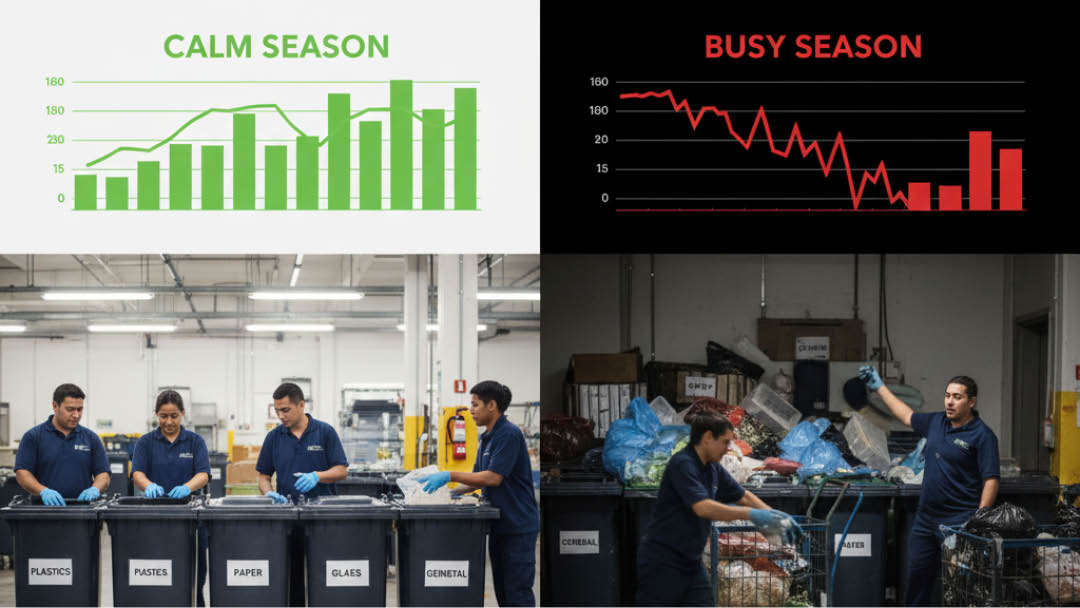
Most waste programs don’t fall apart when conditions are calm and predictable. They strain when volume increases, schedules compress, staffing thins out, and the pace of work accelerates just enough that every small inefficiency suddenly matters.
During these periods, contamination rises, overflow becomes routine, and workarounds appear where clear processes used to exist. What’s striking is that the people involved are often the same ones who were sorting correctly just weeks earlier, which can make the breakdown feel confusing or even personal.
In reality, busy seasons don’t create new problems so much as they reveal the ones the system was already carrying.
Peak demand removes the slack the system quietly relied on.
Many waste programs function because there’s a bit of unspoken margin built into everyday operations. There’s usually enough time to pause, enough space in the bin, and enough flexibility in staffing or pickup schedules to absorb small mistakes without consequences compounding.
When demand spikes, that margin disappears.
Bins fill faster than expected. Material moves through spaces more quickly. Decisions that once felt manageable now collide with more urgent priorities. The program doesn’t collapse all at once, but it starts making tradeoffs it was never designed to handle gracefully.
What breaks isn’t the idea of the program. It’s the assumptions underneath it.
Cognitive load rises long before behavior changes are noticed.
Busy seasons don’t just increase material volume. They increase mental load.
People are juggling more tasks, responding to more interruptions, and operating under tighter time pressure. In those conditions, decision-making shifts toward simplification. The brain looks for the fastest acceptable option rather than the most precise one, especially when the consequences of precision feel distant or abstract.
Training hasn’t been forgotten, and motivation hasn’t disappeared. But the system hasn’t adjusted to the reality that attention is now scarcer than it was before.
Temporary workarounds quietly become permanent habits.
One of the most subtle dynamics during busy periods is how short-term fixes turn into long-term behavior.
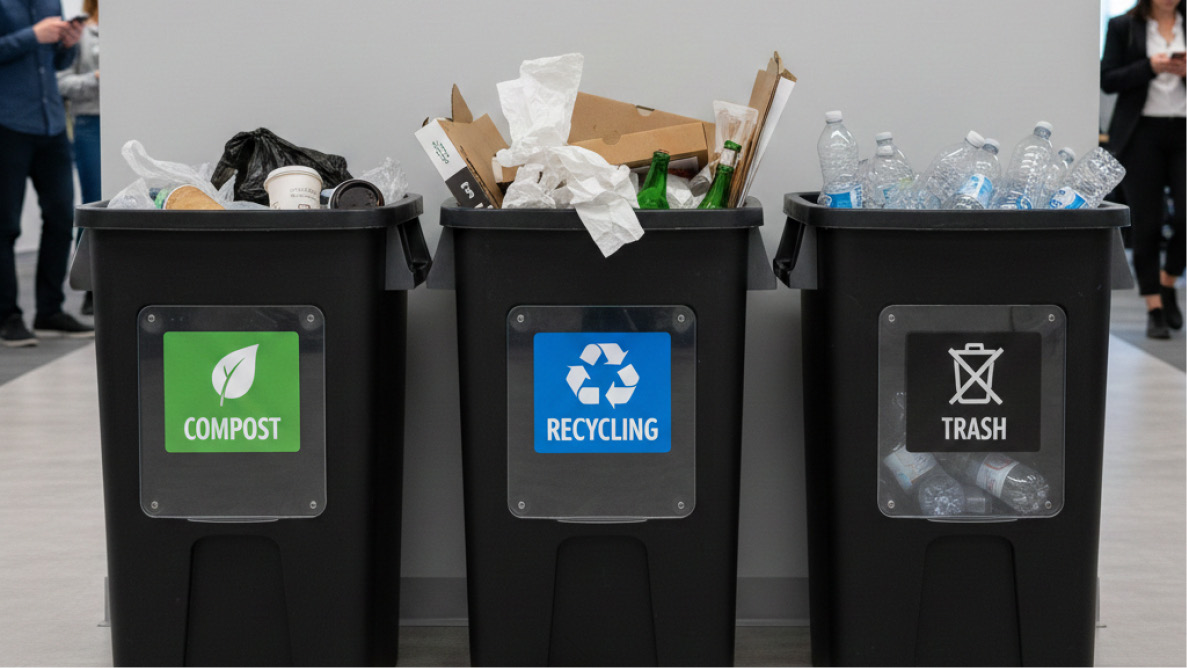
A bag goes into the wrong stream to clear space. A cart gets consolidated to keep things moving. A sign gets ignored because the bin is already overflowing. Each decision feels reasonable in the moment, especially under pressure.
When the pace eventually slows, those adaptations don’t always unwind. The system has learned a new way to function, and unless something actively resets it, the workaround becomes part of the baseline.
From the outside, this looks like regression. Structurally, it’s learning under constraint.
Programs that only work when things are calm aren’t resilient.
It’s common to treat busy seasons as anomalies. Once volume drops or staffing stabilizes, the assumption is that performance will naturally recover.
Sometimes it does. Often it doesn’t.
If a program consistently struggles whenever conditions are less than ideal, it’s not a seasonal issue. It’s a design issue. Real-world systems experience pressure, disruption, and uneven demand. Programs that depend on calm conditions to succeed are fragile, even if they look effective most of the year.
Resilient systems don’t ask people to compensate endlessly when things get hard. They absorb pressure without breaking.
This isn’t about asking people to care more.
When performance drops during busy periods, the instinct is often to remind people to stay vigilant, follow the rules, and not let standards slip. That response assumes people have extra capacity to give.
Most don’t.
What’s missing isn’t effort or intention. It’s a system that adjusts expectations, support, and feedback when conditions change, instead of assuming that the environment will always cooperate.
A gentle diagnostic question.
If waste performance reliably declines during busy periods, it’s worth asking:
Which parts of the program only work when volume is low, time feels flexible, or staffing is stable?
If the answer is “more than we expected,” that’s not a failure. It’s information the system has been trying to provide all along.